
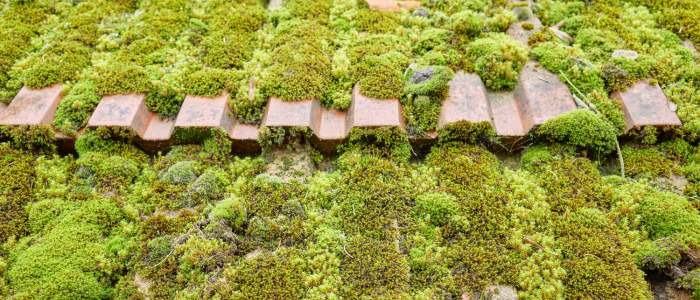
If you’ve noticed green, fuzzy patches spreading across your roof, you’re not alone—moss growth is a common problem for many homeowners. While it may look harmless at first, moss can slowly trap moisture, lift shingles, and shorten your roof’s lifespan.
In this guide, I’ll show you a roofer’s proven method on how to remove moss from a roof safely, effectively, and without causing damage—so you can protect your home and extend your roof’s life for years to come.
Why Moss Removal Matters
Moss, algae, and lichens trap moisture against your roof. NRCA warns that heavy moss buildup “hinders drainage” and can accelerate roof failure. In practice, I’ve seen moss lift shingles and create leaks in weeks. Removing moss promptly prevents rot and preserves the roof’s waterproofing. Remember: moss = shingles’ enemy.
Safety First: PPE and Best Practices
Safety is critical when cleaning a roof. Always use proper PPE: slip-resistant shoes, safety glasses, and gloves (ideally chemical-resistant). If you’re using a sprayer, wear a face shield and a dust mask or respirator to avoid fumes. OSHA mandates eye protection when using cleaning tools. When climbing, use a sturdy ladder and fall protection harness if required (over 6 ft). Cover plants with plastic to shield them from runoff, and work from top to bottom so debris doesn’t fall on you or your workspace. Never pressure-wash: high pressure can tear shingles and void warranties.
Tools & Materials Needed
I keep these on hand for moss jobs:
- Soft-bristle brush or broom: to gently remove dry moss without scratching shingles.
- Garden sprayer: for applying solutions evenly.
- Safety gear: ladder, fall harness, goggles, gloves, long sleeves.
- Moss-cleaning solution: See below for recipes or products.
- Hose (nozzle spray): for low-pressure rinse.
| Method | Pros | Cons | Best Use Case |
| Manual Brushing | No chemicals; immediate removal. | Hard on roofers; can break shingles if too aggressive. | Light moss on durable shingles. |
| Bleach/Soap Wash | Kills moss at root; widely available. | Can discolor plants; needs rinsing; harsh on environment. | Asphalt shingles (no pressure). |
| Vinegar/Lye Solution | Natural; avoids bleach fumes. | Slower acting; can damage vegetation; requires careful dilution. | Quick DIY spot treatment. |
| Commercial Moss Killers | Designed for roofs; often biodegradable. | Costly; needs safety precautions. | Large infestations; follow instructions. |
| Soft Wash Service | Thorough, low-pressure, longer-lasting. | Can be expensive; professionals needed. | Entire roof, heavy moss/algae. |
| Pressure Washer | Fast removal. | Not recommended: damages shingles. | Avoid on most residential roofs. |
Step-by-Step Moss Removal Process
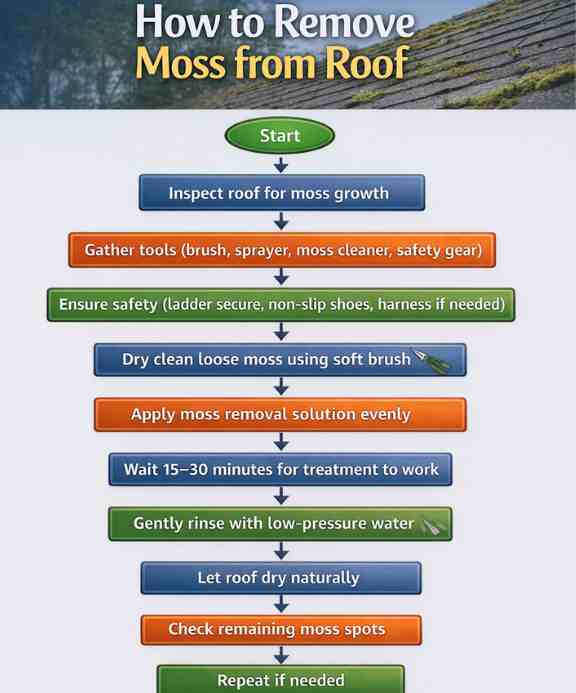
- Inspect & Plan: Identify mossy areas and the extent of growth.
- Safety: Secure ladder and use harness if on steep sections. Wear goggles and gloves.
- Prep: Remove loose moss by hand or with a soft brush, moving downward to avoid lifting shingles.
- Apply Treatment: Mix a bleach solution (50:50 bleach and water) or vinegar solution, or use a safe moss killer. Spray it over mossy spots.
- Wait: Let the solution sit ~15-20 minutes so it kills moss roots.
- Agitate: Lightly brush or scrub stubborn patches. Avoid excessive force.
- Rinse: Hose down gently with low-pressure water to wash away dead moss and chemicals.
- Repeat if Needed: Some heavy moss may need a second pass.
- Final Check: Clear gutters and roof debris; check that shingles aren’t damaged by scrubbers.
Throughout, follow manufacturer’s instructions for any commercial product you use, including dilution rates and safety. Wear any PPE specified on product labels (often gloves and eye protection).
DIY Solutions vs. Commercial Products
DIY Recipes: Many homeowners use household chemicals:
- Bleach + Water: (1:1) is very effective at killing moss. However, it can harm plants and may lighten roof color if overused. Always thoroughly rinse.
- White Vinegar: (straight or 1:1 with water) is milder. It kills moss over time but requires multiple applications.
- Baking Soda Paste: Some mix baking soda and water into a paste for spot treatment. It’s slow but eco-friendly.
Commercial Cleaners: Look for products labeled for roof/moss removal. For example, some contain potassium fatty acid salts (a soap-based moss killer) which are effective and “won’t stain surfaces”. Others use chelated iron or zinc. These are usually more expensive but designed to be roof-safe. Always follow the tech sheet: cover vegetation beforehand and rinse when done.
Prevention vs. Effectiveness/Cost
| Prevention Method | Effectiveness | Typical Cost | Notes |
| Zinc Strips | High (passes ions on rain) | $$ (moderate) | Lasts ~10-20 years; best under ridge. |
| Copper Strips | Very High (strong ions) | $$$ (higher) | Lasts ~20-40 years; avoid contacting aluminum. |
| Annual Cleaning | Medium (breaks life cycle) | $ (mostly time) | Easy with ladder brush or garden hose. |
| Tree Trimming | Moderate | $ (low) | Increases sunlight, reduces moisture. |
| Chemical Prevention | Variable | $$ (product cost) | Spraying zinc sulfate can inhibit moss regrowth. |
| Replace Shingles | Varies by type | $$$$ (high) | Algae/moss-resistant shingles exist; upfront cost. |
When to Call a Professional
Sometimes DIY isn’t the answer. Call a pro if:
- Your roof is very steep or high (risk of falls).
- Moss covers the entire roof densely.
- You’re not comfortable on ladders or don’t have proper gear.
- Initial cleaning efforts fail repeatedly.
Pros may use soft washing: low-pressure pumps with specialized chemicals that kill moss effectively without pressure-washing damage. They’ll also handle safety equipment and dispose of chemical run-off responsibly.
Seasonal and Roof-Type Tips
The best time to clean moss is during a dry, mild spell (spring or early fall). Avoid high heat (solution dries too fast) or freezing conditions. On asphalt shingles, cleaning once a year is usually enough; more if your roof is shaded or in a humid climate. Metal or tile roofs can tolerate a little more brushing but still benefit from the same methods.
Remember, on asphalt shingles, avoid standing water and harsh scrubbing (it can remove granules). On wood shake roofs, use even gentler methods (water and mild cleaners only). Always clear gutters first, so water flows freely when you rinse.
6-Point Roof Moss Maintenance Checklist
- Inspect Quarterly: After winter/spring, check for new moss.
- Clean Gutters: Remove leaves/debris to prevent moisture build-up.
- Brush Moss Early: Knock off loose growth before it embeds.
- Apply Preventative Spray: Use moss-killing product in spring.
- Install Zinc/Copper Strips: If you have heavy moss, a passive barrier can save work.
- Trim Trees: Keep branches 6–10 feet from roof to increase sun and air flow.
Performing these regularly keeps moss from taking hold and extends your roof’s life.
Image Guidance
Include clear photos to illustrate each step: e.g., a roofer applying moss cleaner with a sprayer, using a soft broom on shingles, the zinc strip installed at a roof ridge, and shots of clean vs. mossy shingles. Always show PPE being worn (gloves, goggles, harness). Good lighting (daytime) and a stable angle (ground level or drone shot) make for engaging, instructional images.
By following these methods – from wearing the right PPE to choosing the correct cleaning agents and prevention tactics – you’ll effectively remove moss and protect your roof for years to come.
FAQs
Is it safe to use bleach on my roof?
Yes, but with precautions. A 1:1 bleach-water solution will kill moss. Wear gloves/goggles, protect plants, and rinse well. Use non-pressurized spraying – do NOT pressure-wash shingles, as the high pressure can tear them.
How often should I remove moss from my roof?
At least once a year is recommended. In shaded or damp areas, inspect and clean more often. Regular cleaning prevents heavy buildup and protects shingles.
How do zinc/copper strips prevent moss?
Metal strips near the roof peak release ions in rainwater that inhibit moss growth. Zinc (cheaper) lasts ~10–20 years; copper (more potent) lasts longer but costs more. They slow regrowth but don’t remove existing moss (you must clean first).
Final Thoughts
For homeowners , knowing how to remove moss from roof is crucial to maintaining a safe, long-lasting, and attractive home. By combining gentle physical removal, natural or low-toxicity treatments, and preventive measures, you can keep your roof moss-free and protected from damage. Regular maintenance, inspections, and sunlight exposure are key steps to ensure your shingles remain healthy for years to come.